

Technology Moves With Us
Mobility. Scale. Joy. These are the things technology projects should be doing for your small business. Is that happening for you? No? Maybe you need to rethink your strategy.

When I'm teaching, I like to get the class to consider why Apple's iPod (R) product was so successful.
The iPod was revolutionary in that it allowed us to be mobile. It conveniently offered our entire personal music library without having to haul around records, CD ROM's, or cassette tapes.
The iPod moved with us and it made us free. It made us want to dance. Well, at least that's the idea Apple wanted to project with its memorable ad line.
The success of the iPod as a technological innovation is poignant to small business in a couple of respects.
Firstly, successful tech should enable freedom of movement. The agility of a small business is enhanced with good technology and not constrained. Agility should never be compromised. If increased investments in technology force a small business to work with greater constraints that slows down processes or diminishes the consumer experience, there's no value in that implementation. Good tech lets us dance.
Secondly, successful tech should scale. Our ability to put literally thousands of songs on a tiny device speaks to the power of computing - to do more with less. If a small business invests in technology and it doesn't scale (allowing us to add more customers, transactions, content, activities, products, services, etc. without introducing additional costs), something's wrong. That's not how tech should work. All technology should provide a favorable economy of scale.

Thirdly, successful tech brings us joy. The magic of the iPod was the emotion it inspired. It allowed us to jump for joy, sprint, cry, or the power to finish a good workout. Good technology isn't just about cost savings and efficiency - good technology makes us feel. If a small business invests in technology and it inspires anger, confusion, conflict, compounds stress, or, fails to delight customers, why is it there? Why implement a tool that makes anyone feel like crap? Those feelings will only suppress adoption and effectiveness.
Mobility. Scale. Joy.
If these things aren't happening in your tech projects, we might be able to help. Give us a call.
R

Don't Mess With Stray USB Sticks
If you find a USB stick on the street, don't plug it into a computer. Its content can likely harm you. Why do you want to learn more? Because you're not stupid.
Earlier this year, an experiment was conducted. 200 unbranded USB drives were dropped in high-traffic public areas in Chicago, San Francisco, Cleveland, and Washington DC. 20-percent of those who found the USB sticks picked them up and just plugged them right in to an electronic device. The users then proceeded with clicking on files and browsing to websites.
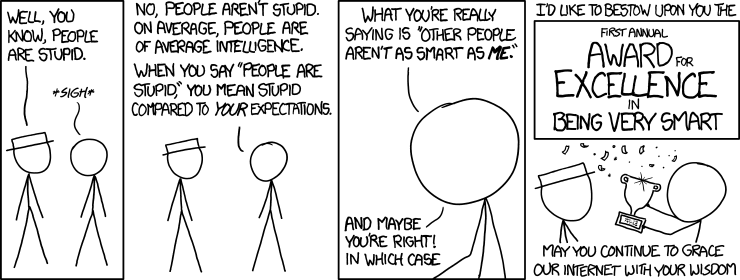
Okay, "people are stupid" isn't necessary a newsflash but let's go ahead and say that you might not understand why this is a risky behavior and, in fact, you don't see why sticking USB sticks in computers is a problem.
USB sticks are unencrypted storage devices that are read by computers when they're "mounted", or, inserted into a USB port. When that happens, it's possible that the USB drive can deliver a virus to the computer. Further, the files found on the USB drive can be double-clicked or opened, allowing for a virus to then launch on the infected computer. Finally, browsing to websites introduced by a USB stick could also introduce a virus to your computer.
Viruses, naturally, can then steal personal private information or harm your computer system.
Why did the stupid people do this? They wanted to see if there were any naked pictures on the drive, of course, or, wanted to invade the potential privacy of others by looting their personal files. They also wanted to see how big the drive was to see if they wanted to keep it for themselves, because people are greedy pigs. And finally, they just weren't trained not to do so, or, didn't care about the potential security risk - simply ignorant. Peoples do as peoples does.
So two take-aways here:
1. Don't store your crap on USB drives. It's an insecure medium and can easily fall out of your control, leaving your data to the sex-starved, greedy, ignorant masses.
2. Don't be stupid. Don't take any unknown USB drive and stick it into a computer you own, or, your work computer. Naturally you should do it on your friends computer or you mom's or something, but if you're not going to be a jerk about it, just throw it away. Well, okay, e-recycle the thing.
R

Apple's Got It Goin' On with Security
Apple is changing the rules. They're not asking for permission - they're making real changes to their products that protect consumers: not just from the government but from Apple itself.

Hey, you know what's cool?
A tech company that testifies in court to making a product that's actually secure.
And there's nothing the government can do about it. N'yah.
So this week, Apple admitted to a judge that retrieving information from a locked iPhone 6 would be impossible and outside of their control. Oooo I dig that word, impossible.
Okay, why is that cool? It's awesome because the iPhone 6's encryption model is something Apple didn't develop a backdoor to - for either for themselves or for the NSA. It means if you use your iPhone 6 and lock it, the data on the unit can't be recovered, intercepted, or hacked.
Apple has taken a position of implementing stronger technical controls on both the iOS and Mac O/S platforms since the Snowden revelations, and their consumers are safer for it.
Also, their staunch stance on security has also recently removed root-level access (System Integrity Protection) from their Mac O/S product in El Capitan. That just means that Apple made it harder for programs and people to access the most vulnerable area of their operating system for the first time.
Okay sure, encryption and operating system rules are wonky technical things, but the bottom line is that Apple has taken a leadership role in engineering security into their products.
Instead of waiting on government regulations or adjusting consumer behavior, Apple is designing security into their products, and regardless of the consequences.
Rock on.
R