The Power of AI. It Takes a Lot of It.
Small businesses must embrace AI to remain competitive. But what will that mean for energy consumption?
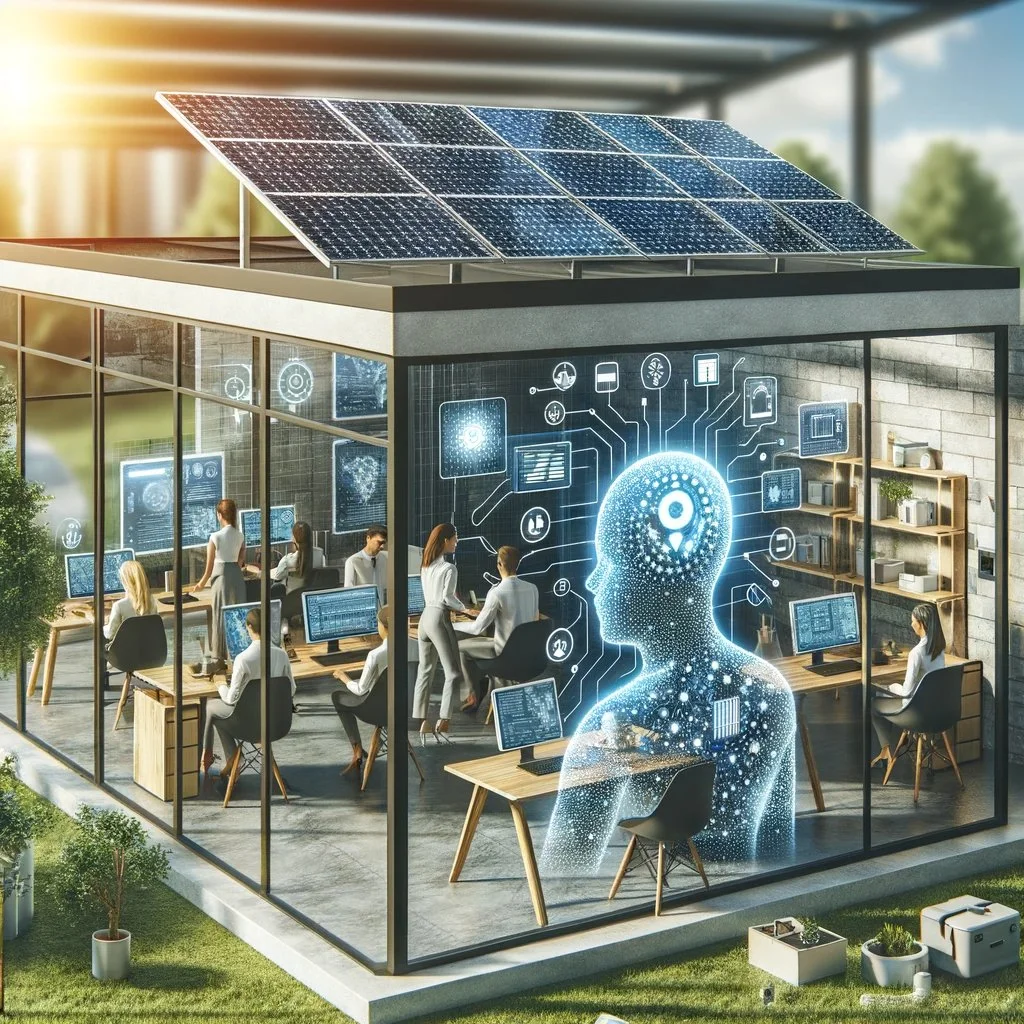
As Artificial Intelligence (AI) weaves its way into the fabric of small businesses, its power consumption becomes an increasingly important consideration. While AI offers immense benefits, from automating mundane tasks to providing insightful analytics, its energy demands can pose challenges, particularly for small enterprises conscious of operational costs and environmental impact.
A recent study shows that the power used to train AI models around the world will equal the energy needs of Japan by 2026. That’s an extraordinary amount of energy on an electrical system in the United States, already crippled by age and growth, and ignores entirely the impact of Cryptocurrency on the problem.
AI and Energy Efficiency: A Balancing Act
Small businesses typically operate on tighter budgets and smaller margins than larger corporations, making the efficiency of AI systems crucial. High-performance AI applications can be energy-intensive, especially those involving machine learning and data processing. According to a recent study by MIT, training a single AI model can consume as much electricity as 300 homes in a year. This highlights the need for energy-efficient AI solutions that do not compromise performance.
The Role of Green Technology
Advancements in AI are paralleling innovations in green technology. Newer AI models are being designed to be more energy-efficient, and many tech companies are also shifting towards using renewable energy sources to power their AI systems. For small businesses, this means access to AI technologies that are powerful, cost-effective, and less taxing on the environment.
Still, Green Power won’t be enough without the means to store it. We’ll be dependent on improving battery technology.
What This Means for Small Businesses
AI will level the playing field on competitive differentiation. Small businesses everywhere will have cheap, affordable access to AI models to improve the efficiency of their business. Businesses that don’t use AI will be comparatively slower and less profitable. So, there’s an imperative for adoption.
Incorporating AI into small businesses must be done thoughtfully, with an eye on power consumption and environmental sustainability. By choosing AI solutions that prioritize energy efficiency, small businesses can harness the full potential of digital transformation without incurring prohibitive energy costs or contributing excessively to carbon emissions.
Understanding and implementing energy-efficient AI will be key to sustainable growth for small businesses looking towards the future. Embracing AI technologies that align with these principles can lead to significant competitive advantages, helping these businesses thrive in a digitally driven marketplace.
What Can Small Businesses Expect from AI?
AI empowers small businesses with tools to compete big. Boost efficiency and sales, sure, but what does it mean for the future of work? For Capitalism?
Artificial Intelligence (AI) is not just a buzzword but a fundamental growth component, especially for small businesses. AI's role in transforming these businesses is becoming more apparent and significant.
Where Will AI Be Used?
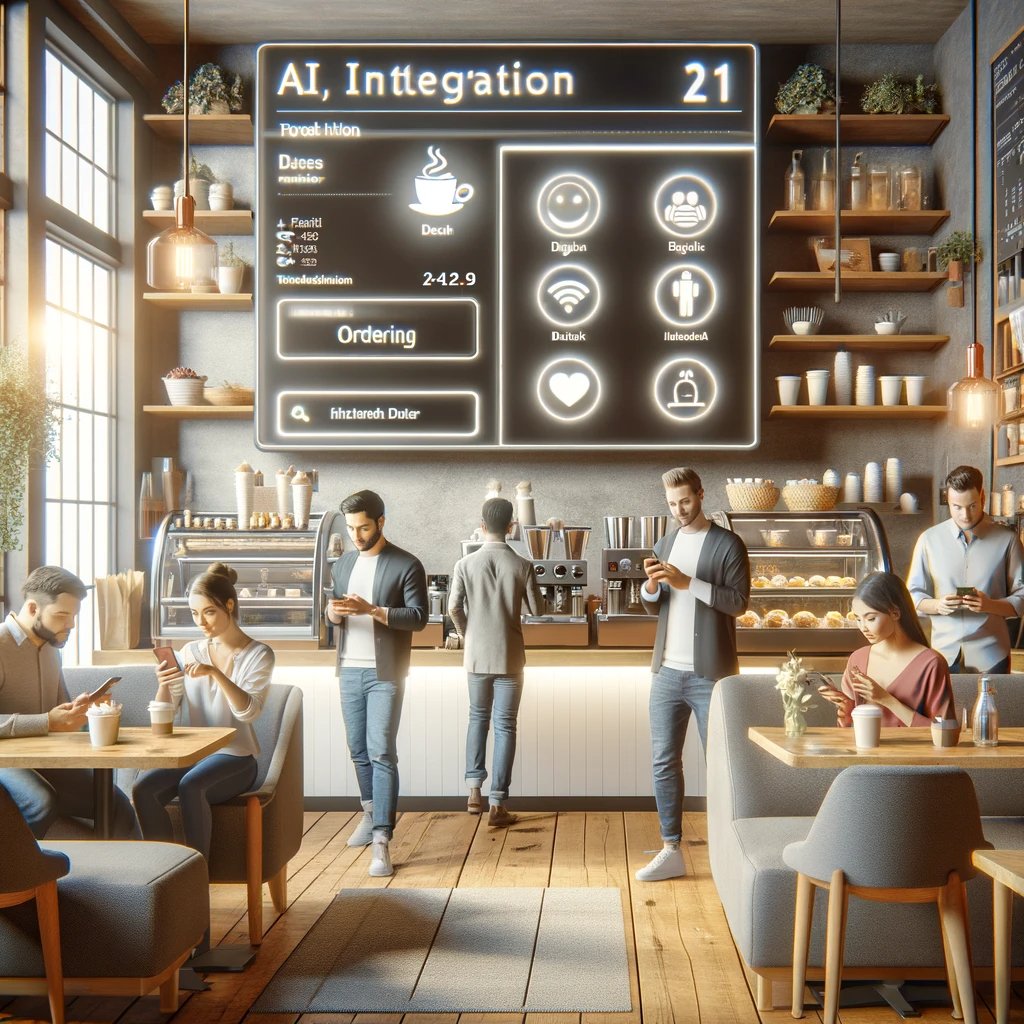
For small businesses, customer service is one prime area where AI can offer round-the-clock customer support through chatbots and virtual assistants, significantly enhancing customer experience while reducing overhead costs. Additionally, AI-driven analytics tools can provide these businesses with deep insights into consumer behavior, enabling personalized marketing strategies that were once only accessible to larger corporations.
How Will It Be Used?
The application of AI extends into inventory management, where predictive algorithms can forecast demand and optimize stock levels, thus minimizing waste and ensuring product availability. Similarly, AI can streamline financial operations through automated bookkeeping and fraud detection, saving time and increasing accuracy.
Self-service scheduling for customers is already here. But what if, in the future, consumers use AI digital assistants to communicate with the AI digital assistants of businesses, allowing for rapid-fire decision-making?
Okay, what about bookkeeping, payroll, and taxes? For most, these are known variables, easily performed by an automated intelligence. Why couldn’t an automated accountant prepare, have you approved, and then file your paperwork?
How about art and marketing? What if you could use an AI concierge to handle a multi-channel marketing blitz on a specific theme?
We’re already using expert systems with HR. Now, expand that to specialized intelligence: operations, manufacturing, legal, and information systems. You could engage with an AI to learn how to secure your network better (disintermediating me!) or an AI manufacturing expert to get more out of a specific process on an assembly line.
Well, wait a second — HR, IT Operations, Accounting, Legal — if the cost-centers of a small business can mostly be automated by AI, who’s working?
What Does It Mean for Small Businesses?
Integrating AI means small businesses can operate more efficiently and compete more effectively in the market. It levels the playing field, allowing small players to offer services and customer engagement at par with their bigger counterparts. A Salesforce survey indicates small business sales increased by 30% when using AI for personalized customer interactions.
Inevitably, it means being hyper-efficient with less labor. Most execs feel AI will shrink workforces within the next five years. McKensie suggests that sixty percent of tasks within modern work could be automated. And if fewer people are working and earning an income, how does Capitalism function? Not only where we work but the way we work is rapidly changing.
The future of AI for small businesses promises growth and a transformation in how services are delivered and operations are managed. With AI, small businesses are not just surviving; they're thriving.

Understanding Browser Hijacking
Browser hijacking poses a real threat to small businesses, leading to data breaches, financial loss, and damaged reputation.
Small businesses thrive by leveraging the Internet for operations, marketing, and communication. However, this dependency exposes them to cybersecurity threats, including browser hijacking.
Browser hijacking occurs when unauthorized software alters how your web browser operates without your consent, often redirecting you to malicious websites, changing your homepage, or inserting unwanted ads. For a small business, this can mean more than just a nuisance; it can lead to data breaches, financial loss, and damaged reputation.

A great example is when a browser is hijacked to display a fictitious message about a computer’s security. This is a great example of scareware:
Its warning is contained within the confines of the browser window.
It’s big and scary.
It includes an immediate, irrational call-to-action to dial a telephone number.
Sometimes, it may be difficult to close this window.
Recent studies show that browser hijacking has become increasingly sophisticated, with attackers using it as a gateway to deploy further malware or to steal sensitive information directly. The risk is heightened for small businesses that may not have the robust cybersecurity defenses of larger corporations. According to the Cybersecurity and Infrastructure Security Agency (CISA), small businesses are the target of 43% of cyber-attacks, many of which begin with seemingly benign browser hijacking.
The biggest risk, of course, is that somebody actually calls the number. If you ever see something like this, use Task Manager in Windows to kill the browser, or, restart your PC. Your machine’s not harmed — they’re just trying to trick you into believing it is so you’ll call that number — leading to criminal fraud. Heck, just send me a screenshot in email and I’ll give you some practical advice for getting rid of it.
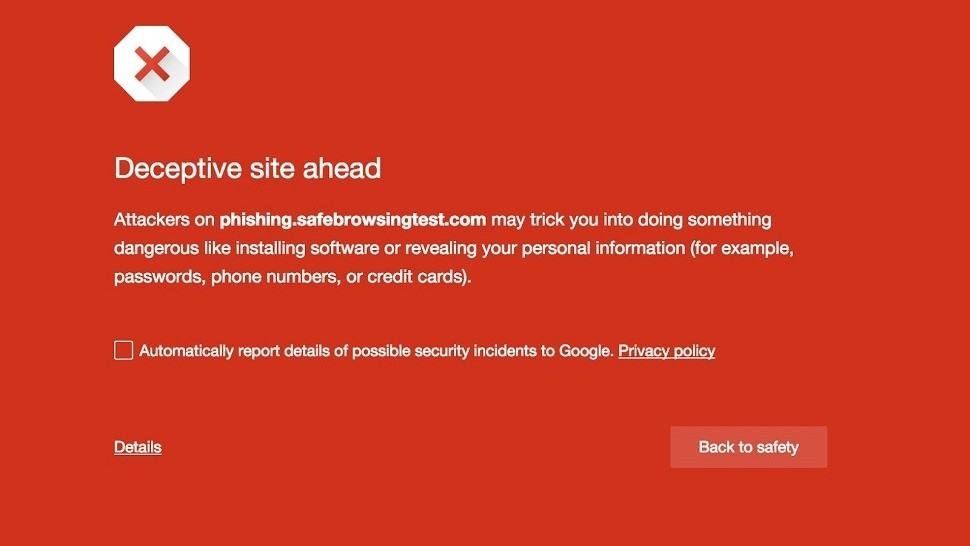
Luckily, Google is on the forefront of protecting users. Chrome can help detect when a user is going to a known-bad site and intercept the hijack with a warning that looks something like this.
The impact on small businesses can be severe. A hijacked browser can redirect customers away from your site, eroding trust and reducing sales. More alarmingly, it can be used to gather sensitive information, such as login credentials and financial data, leading to financial theft or identity theft. The recovery from such attacks involves immediate IT costs, potential legal fees, fines, and long-term brand damage.
To protect your business, it's essential to educate your team on recognizing and avoiding suspicious links and attachments, maintain up-to-date antivirus software, and regularly back up critical data. Implementing strong, unique passwords and multi-factor authentication can also add an extra layer of security.
In conclusion, the threat of browser hijacking is real and potent, especially for small businesses. By understanding the risks and taking proactive steps to mitigate them, businesses can safeguard their operations, protect their customers, and secure their future in the digital marketplace.