
Blast Your Way to a Cleaner Connection: The Ultimate Guide to Network Pipe Cleanliness!
Ready to turbocharge your internet with a laugh? This April Fool's Day, discover the hilariously ingenious hack of cleaning your network pipes using canned air! Picture this: you, armed with a can of compressed air, blasting away at your router, banishing digital dust bunnies and unlocking secret internet realms of unfathomable speed. Embrace the whimsy, and give your connectivity a gust of freshness. It's tech maintenance turned tech amusement!
Hey there! While the internet is buzzing with pranks and gags, we have a serious piece of advice that will blow your socks off – quite literally! Are you ready to revolutionize your internet experience? It's time to clean your network pipes with none other than the trusty can of compressed air!
Why Clean Your Network Pipes?
First things first, let's tackle the elephant in the room. Why, you ask, would you need to clean your network pipes? Well, dear reader, as dust bunnies can clog your home's ventilation, digital dust bunnies (yes, we're coining that term!) can clog your internet connection. Slow speeds, lagging video calls, and endless buffering might be your network crying out for a clean!
Enter the Mighty Can of Compressed Air
Now, we're not talking about just any cleaning routine. No, we're proposing an innovative, state-of-the-art, groundbreaking solution: canned air. That's right! The same stuff you use to blast crumbs out of your keyboard can now be your secret weapon for crystal-clear connectivity.
Imagine it: with just a few spritzes, you're not just cleaning; you're performing an exorcism on those pesky digital gremlins that haunt your network pipes. Wave goodbye to the invisible cobwebs of yesteryear and hello to the superhighway of tomorrow!
How to Proceed?
Grab your canned air, attach the straw nozzle (precision is key!), and aim it towards your router. Now, give it a good, long blast. The high-speed air will travel through your network cables, whisking away any data that has been loitering around too long. It's like a spa day for your internet connection!
But Wait, There's More!
As a special April Fool's treat, if you clean your network pipes today, you'll unlock the secret bonus level of the internet, previously accessible only to wizards and tech gurus. This bonus level offers lightning-fast downloads, instant buffering, and, rumor has it, an eternal free subscription to a VIP meme stream.
So, what are you waiting for? Grab that can of air and give your network pipes the puff of life they've been gasping for. It's quick and easy, and if nothing else, you'll have a blast—literally!
Happy April Fool's Day! And remember, a clean pipe is a happy pipe!
R
Understanding Backup Security Codes in Two-Factor Authentication: A Simple Guide
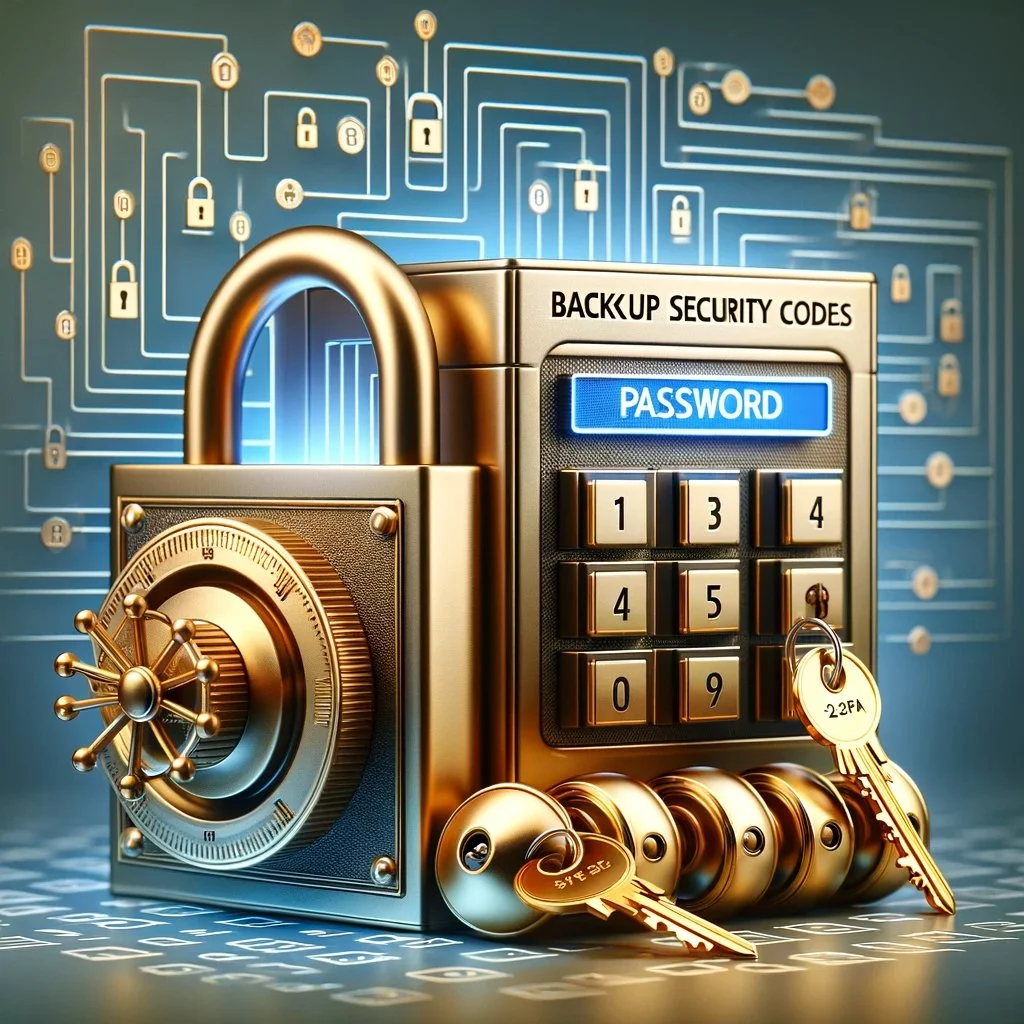
In the realm of digital security, backup security codes are your safety net. Essential for anyone using Two-Factor Authentication (2FA), these codes are the emergency keys to your online accounts, ensuring access even when your primary 2FA method is unavailable. Think of them as secret codes locked away, ready to secure your digital vault in unexpected situations. They are a critical safety measure, safeguarding your online presence against unforeseen challenges.
In today's digital world, safeguarding our online accounts is more crucial than ever. One effective security measure is Two-Factor Authentication (2FA), which adds an extra layer of protection beyond just a password. However, what happens if you can't access your second factor, like your phone? That's where backup security codes come into play.
What is Two-Factor Authentication (2FA)?
Imagine your online account is a vault. Two-Factor Authentication (2FA) is like having a second lock on that vault. The first lock is your password; everyone knows they need one. The second lock is something only you can access, like a code sent to your phone. This means even if someone steals your password, they can't open the vault without that second code.
The Role of Backup Security Codes
Now, consider if you lose your phone or can't receive the code. It's like losing the key to the second lock. Here's where backup security codes shine. They are like spare keys. When setting up 2FA, you'll get these special one-time-use codes. Think of them as emergency keys to your online accounts that you can use if your primary 2FA method is unavailable.
Why Are They Important?
Backup security codes are crucial because they ensure you never lose access to your accounts, even in situations like losing your phone or being in a place without internet service. They are your safety net.
Safekeeping Your Backup Codes
Treat these codes like precious jewels. Store them securely and privately, perhaps in a locked drawer or a safe. Never share them online or leave them where others can find them. Remember, anyone with these codes can access your accounts if they have your password.
In conclusion, backup security codes are a critical component of your online security strategy. They ensure that you maintain access to your accounts, no matter what happens. By understanding and using these codes, you’re taking a significant step towards protecting your digital life. Always keep them in a safe place and only use them when absolutely necessary. Your digital security is paramount, and being prepared with backup codes is a smart way to protect it.
R

The Case for a 32-Hour Work Week
Rethink the 40-hour grind. A 32-hour work week promotes productivity, well-being, and a better work-life balance.
The 40-hour work week is ingrained in American culture, but is it truly the most efficient work model? Let's explore why a shift to a 32-hour work week could be the solution we've been overlooking.
Studies have shown that longer hours don't necessarily equate to higher productivity. In fact, according to a study by VoucherCloud, the average worker is only productive for about 2 hours and 53 minutes per day. The remaining time is often filled with distractions, fatigue, and burnout, leading to diminished returns.
In the States, AI and automation have increased productivity levels in the American workforce. Senator Bernie Sanders introduced a bill to the floor in March 2024 to mandate a 32-hour week. And why shouldn’t the American worker receive a dividend from increasing automation? It certainly hasn’t been wage growth — wages have been stagnant in the US since 1970; those profits haven’t been passed to the labor force. Why shouldn’t they get more time?
Moreover, a shorter work week has been linked to numerous employee and employer benefits. Employees experience improved work-life balance, reduced stress levels, and increased job satisfaction. This, in turn, leads to higher retention rates and lower absenteeism, ultimately boosting productivity and morale. See? It’s good for business, too.
Countries like Sweden have already experimented with shorter work weeks, with promising results. In a trial conducted by the Swedish government, nurses in a care home were switched to a 6-hour work day, resulting in higher energy levels, better patient care, and lower turnover rates.
Advocates for the 32-hour work week argue that it enhances individual well-being and fosters a more sustainable economy. With increased leisure time, people have more opportunities for personal growth, spending time with loved ones, and pursuing hobbies—all of which contribute to a healthier and happier society.
The 40-hour workweek may have been the norm for decades, but it's time to reconsider its effectiveness in today's labor market. Embracing a 32-hour work week could lead to happier, more productive employees and a more balanced society.